


September 2022 saw the UK’s average monthly rent climb to a new high of £1,159 per calendar month, despite both tenants and landlords suffering at the hands of the economy.
But what is causing the rise in rents, and is the monthly rental value set to increase further?
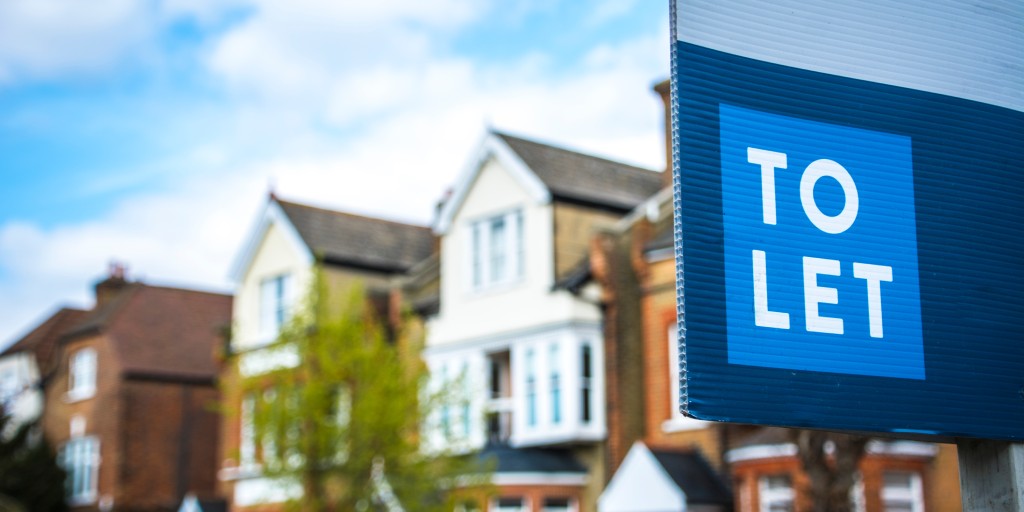
There’s a conundrum currently. Economic uncertainty has resulted in a massive property market elephant in the room. With spiralling mortgage rates, many buyers are being priced out of the market, unable to get a mortgage and therefore needing to rent. However, the increasing mortgage rates are making things harder for landlords. Some private landlords are leaving the market, reducing the number of available rental properties, with others facing no other choice than to increase rents for tenants.
As Stephen Clark from Finbri bridging finance says:
Rental property listings are down, yet rental demand is increasing and enquiries are up, leaving renters competing over a dwindling supply of homes. There is uncertainty for landlords and tenants. More homes are desperately needed but whilst there is increasing demand and less availability, it’s likely rents will continue to rise.
According to HomeLet’s rental index, prices have increased in every region of the UK, both monthly and annually.
Renters in London experienced the most significant increase, up 2.5% to an average of £1,945 per calendar month (PCM), while those in the Northeast experienced the second-largest monthly shift, with rents rising 2.4% to £609 PCM.
While the Westminster government has announced reforms to protect renters’ rights through the Renters’ Reform Bill, there needs to be more action on the issues driving rising rents, namely high demand for properties and a lack of supply.
How much is the rent in the UK?
There are around 4.4 million households within the private rented sector in England, 340,000 in Scotland and just over 200,000 in Wales.
The ONS monthly update found a 3.6% increase from 12 months to September 2022 across the UK.
Unsurprisingly, London had the highest median monthly rent at £1,450 PCM, nearly £500 more than any other region, with Kensington and Chelsea having the highest median at £2,199 PCM.
Kingston upon Hull, Middlesbrough, and Burnley had the lowest median monthly rents at £450, with the North East having the lowest overall with a median of £505.
The East Midlands had the highest annual growth rate of 4.7%, while London had the lowest at 2.8%.

Why is rent in the UK so high?
Increased rental demand and the limited supply are the main drivers behind the increasing rental prices.
Recently, Rightmove discovered that the gap between supply and demand has widened over the past year, with a 20% increase in households seeking homes and a nearly 10% decrease in the overall number of rental units.
The cost of housing in the rental market has been increasing due to several factors, including:
Failure to build enough homes
The UK is experiencing a housing crisis due to successive administrations’ failure to build enough homes during the past few decades. During this time, social housing stock was either sold off to the private sector through the Right to Buy or destroyed without being replaced.
Approximately 340,000 new homes should be built in England each year, with 145,000 of them being affordable, according to estimates from the National Housing Federation and Crisis. In its 2019 platform, the Conservative government promised to build 300,000 new houses in England -it has not yet achieved that goal.
Lack of rentals currently on the market
It has been discovered that 230,000 new rental properties are needed annually to meet rising demand, yet increasing numbers of landlords are selling up, resulting in the supply of privately rented properties dropping by 260,000 in half a decade.
According to letting broker Foxtons, for every property on their books in London, 30 people were competing to win the tenancy.
Increase in short-term rentals
Short-term rentals have been increasing for over the last four years, with many investors and homeowners wanting to take a slice of the profit.
However, the increase in holiday lets has resulted in a reduction in long-term rentals, reducing the number of available rental properties across the UK.
According to a recent survey completed by Property Mark, 58% of respondents reported that the number of short-term lets within their local area has increased in the past four years.
Locations like Cornwall, where tourism has experienced an increase in short-term rentals because of Airbnb’s recent growth, are facing even more significant demand challenges.
What will increased rents mean for tenants?
The rising rent costs are forcing many tenants into financial difficulty, and the number of tenants evicted by private landlords for nonpayment of rent is at an all-time high.
Compared to the pre-Covid peak of 4,648 between April and June 2019, 4,381 court orders were filed for the possession of residences due to rent arrears between April and June 2022. Over the three months, bailiffs evicted 3,405 private rented households overall, a 39% increase over the prior quarter.
What will increased rents mean for landlords?
The high-interest rates are pressuring BTL landlords to increase rent or sell up leaving an even bigger shortfall in available rental properties.
If more landlords struggle with interest rates, the UK could possibly see fewer rental properties being listed, further exacerbating the already strained rental market.
Will rents continue to increase in 2022?
Experts predict rents will continue to climb in 2022, largely due to rising mortgage rates and supply issues that are yet to be addressed.
Rightmove has already noted a surge in competition for smaller rent homes due to the increase in rental prices and an increased need for affordable houses..There has been a 71% rise in competition for studio flats, with four times as many tenants looking for studio flats as available on the market.
It is a tumultuous time for landlords and tenants, with no sign of easing. Until supply and demand issues are rectified, rents could continue to rise, further damaging an already pressured market.
