


What Is A CV
A curriculum vitae (CV) is a document that summarises your work experience and abilities. Check out this student CV template you can download for free.
CVs for entry-level candidates are usually longer than resumes, ranging from two to three pages. CVs for mid-level applicants with a lot of publications are usually substantially longer.
CVs contain a wealth of information about your academic history, including teaching experience, degrees, research, prizes, publications, presentations, and other accomplishments.
CVs are longer than resumes and contain additional information, especially about one’s academic and research background.
A curriculum vitae summary is a simplified version of a full curriculum vitae that is one to two pages long. A CV summary is a way to express one’s skills and qualifications quickly and succinctly. Large firms may first request a one-page CV summary when a massive pool of applications is expected.
How To Write A CV For A Student
A well-written CV is required whether you are looking for a job after graduation or applying for an internship position. A CV for a college student highlights relevant curriculum, extracurricular activities, internships, and skillsets.
Even if you have little or no experience, knowing how to construct a professionally designed CV will impress hiring managers and enhance your chances of getting an interview call. In this post, we’ll go over a college CV, give you a step-by-step guide to writing one, and look at a template and example to help you get started.
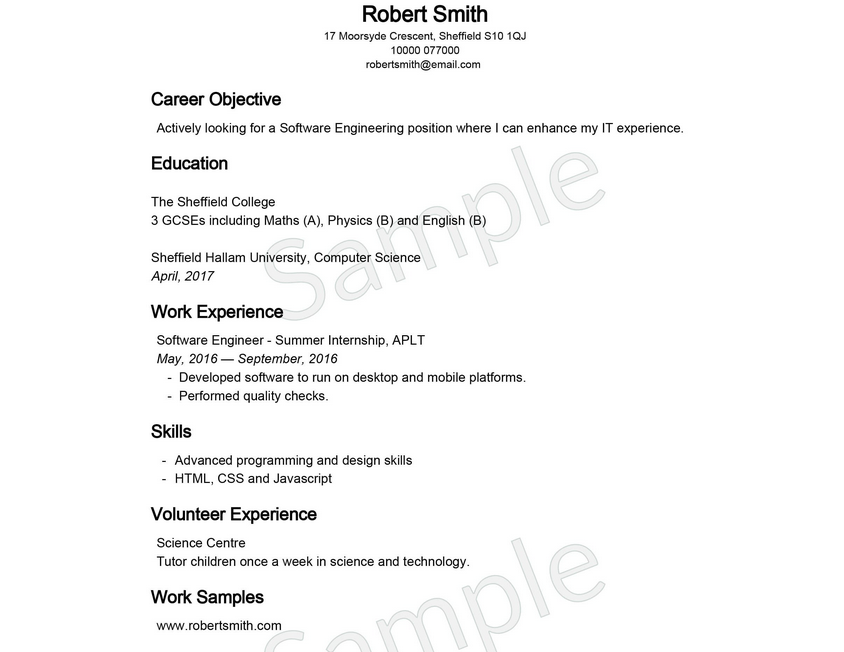
Sample Student CV Template
TIP: Read this article on how to write a letter of recommendation.
Focus on education.
Make your academic background stand out. Include any achievements, such as a high GPA or academic prizes, besides the name of your institution and degree. List any courses you’ve done relevant to the job you’re looking for. Click here to download your own student cv template.
Include relevant jobs.
Consider the qualifications and experience required for the position you desire. Consider how you may highlight work experiences relevant to the position you desire, even if they aren’t explicitly linked. Past employment as a cashier, for example, might be included if it helped you build customer service or leadership skills. Include any internships or positions where these skills were obtained.
Include extracurricular activities
Because you are likely to have limited experience, any non-work activities should be highlighted. Clubs, athletics, babysitting, volunteer work, and community service are examples of these activities. All of these activities can demonstrate your abilities and capabilities.
Include leadership experience
Have you ever been a sports team captain or had a role in a club? Have you ever had a position of leadership in your past jobs? Make careful to include these experiences because they demonstrate your ability to lead a group.
Best Way To Layout A Student CV Template
1. Keep it short and sweet.
The most effective CVs are informative, but they’re also concise. Try to stick to essential ideas and keep your document to no more than two sides of A4.
2. Choose a professional font.
Your CV will be easier to read and scan if you use a professional typeface. Keep in mind that Comic Sans is not your buddy.
3. Present things in a logical order
Use enough spacing, clear section headings (e.g., work experience, education), and a reverse chronological order to keep things clean and easy to read. Also, be sure to emphasise your most recent accomplishments. Refer to a university student cv template.
4. Play to your strengths
To increase the impact of your application, professionally format your CV. If you believe your lack of experience is holding you back, start with education. It doesn’t matter how you order the sections as long as they’re related to the role in question. The cv format should be perfect!
5. Use bullet points
They’re a terrific approach to call attention to any important facts or information, allowing a hiring manager to quickly scan the document and locate your noteworthy accomplishments without wading through the hyperbole.
How Long Should A CV Be?
‘How long should my CV be?’ is a frequently requested question. When it comes to writing a great CV, you must find a balance between highlighting your hard and soft abilities to display your suitability for the position.
Two pages are typically believed to be the ideal length for a CV unless you’re applying for an entry-level position.
That isn’t to argue that your goal should be to write a two-page CV. Always make an effort to include only the most pertinent information. If you can explain all of the necessary details on a single page, you haven’t created a horrible CV (although it may signify that you lack experience for more senior positions).
What about a more extended curriculum vitae? Even if you have decades of experience, recruiting specialists recommend that you keep your resume to two pages, with a maximum of four pages if necessary. The only common exception is academic CVs.
Bottom Line
Crafting the perfect CV can be a daunting task but rest assured, you can construct a perfect CV by following the instructions in this very article!
