


The UK Government is under wants to reduce to amount of waste produced and increase the amount recycled. Consequently, councils across the country have upped their game with regard to recycling, encouraging residents to recycle all plastic, paper, cans and bottles. However, it’s difficult to overemphasize the importance of destroying important and confidential documents, rather than simply throwing them in the bin.
We may dismiss the idea of criminals rummaging through bins and sifting through landfill sites looking for personal data, but identity theft and crimes involving stolen bank and credit card details are on the rise.
Therefore, anything with sensitive and confidential information on, such as your bank or credit numbers, passwords and signatures should be destroyed. So what are your options for securely destroying confidential documents at home?
Here are our 5 best way to dispose of confidential papers
Burning
Burning the documents is a simple solution. Select a safe place, away from any buildings or trees – perhaps your garden barbecue or a campfire – and be aware of any fire restrictions. Always keep a fire extinguisher handy in case the fire gets out of control, and ensure it’s completely extinguished and the area is cleaned up afterwards.
Soaking
Soaking is rather messy solution, but it does work. Add the documents to a rubbish bin or bucket half filled with water, and run some more water on top. Leave to soak for a few hours, perhaps overnight, then stir up the solution so it dissolves into a soggy mess, and is easy to tear apart – excellent for making papier mache with the kids! Using one part milk to two parts water will break the paper down more quickly.
Cutting
If you only have a few documents to destroy, you can take a pair of scissors and cut them into many tiny pieces. This is a very time-consuming method, and only suitable for small amounts. It’s essential to ensure that important numbers, such as bank card numbers, account numbers, etc., are completely unrecognisable.
Shredding
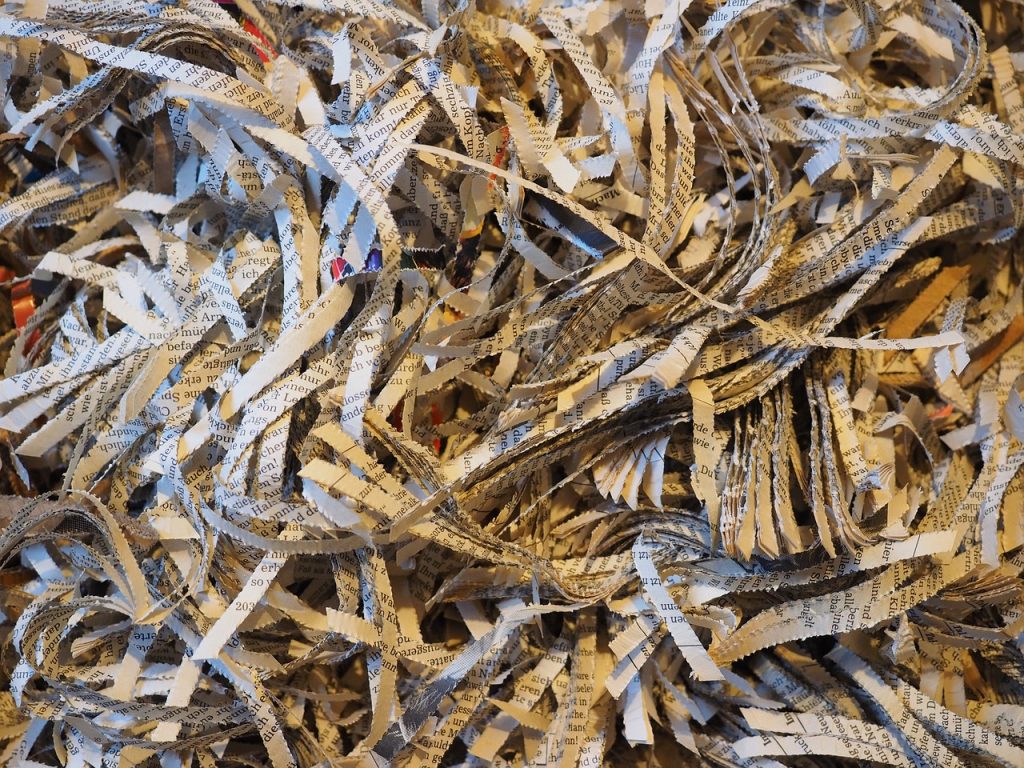
By far the easiest and best method of destroying confidential documents at home is to purchase a home shredder. You can buy a basic shredder for as little as £10, while a more sophisticated one may cost upwards of £50. A cross-cut shredder is the most secure option and, while more expensive, is an excellent option for peace of mind.
Home Shredding Service
Finally, if you are having a good old clear out and have many documents to shred, you can use a commercial home shredding service, which will collect your documents, take them to a secure facility and shred them within 24 hours, for a minimum charge of £80.
Shredding Guidelines
All home shredders should conform to safety standards, but you do need to be aware of possible dangers when using one. Never let children play with the shredder, and tie back long hair, jewellery and loose clothing while using it, so they don’t get trapped.
Shredding small amounts at a time will minimise the risk of paper jams. If you do get into a jam, always unplug the machine before trying to free it. Once you are happy that your documents are safely destroyed, they can go in the recycling bin for collection.
